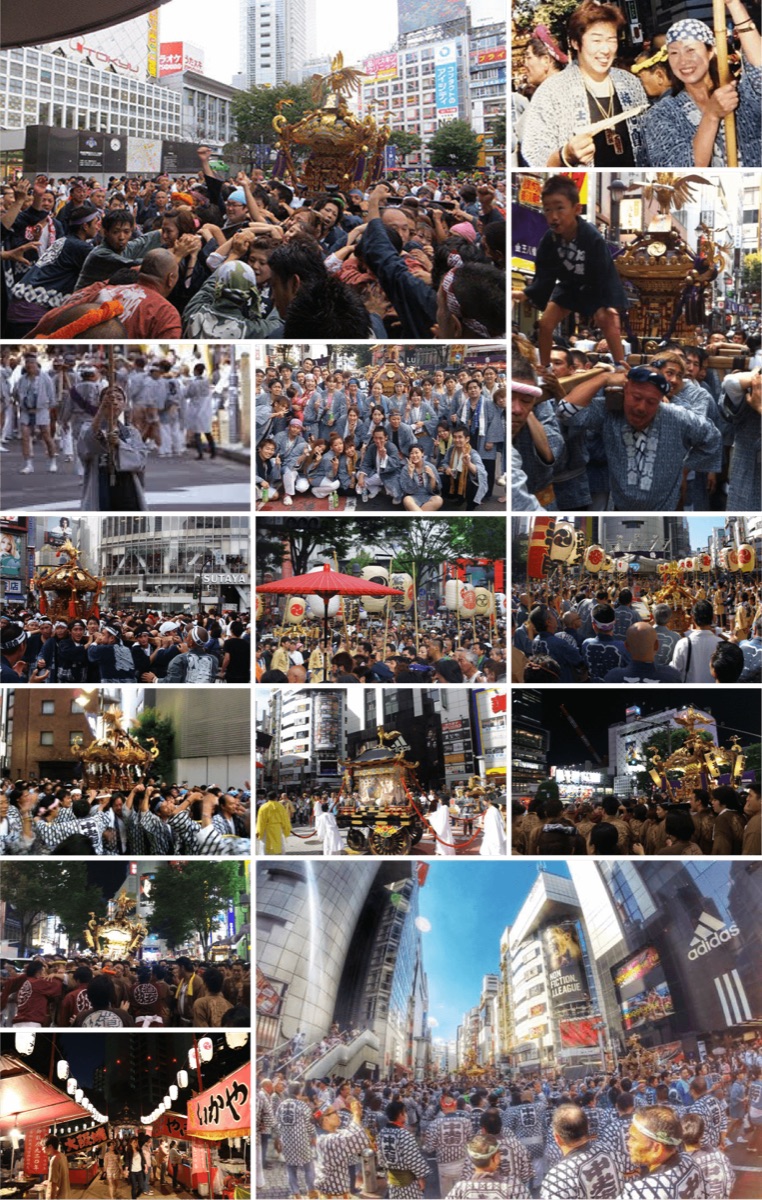
Konno Hachimangu Reitaisai is Shibuya's largest annual shrine festival. In 2026 the public days run Friday 18 through Sunday 20 September, with the main union mikoshi parade on Sunday in front of SHIBUYA109. Fourteen neighbourhood mikoshi meet there around 14:00. Admission to the streets and the shrine grounds is free. The factual hub is the event page. This is how you watch the 109 crush without standing in the worst of Dogenzaka, and what the hilltop shrine is doing while the floats are still in the alleys.
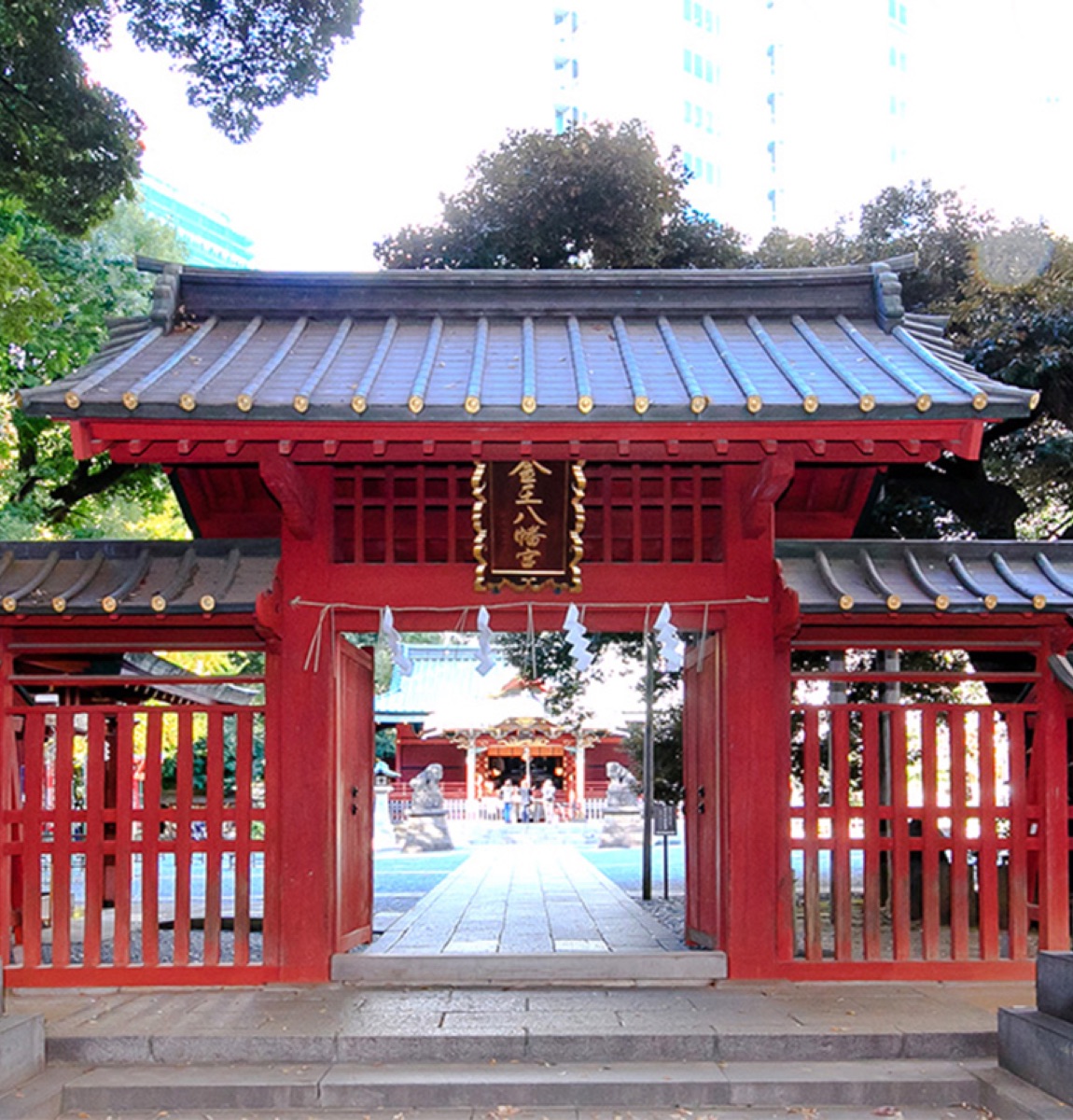
The shrine sits behind Shibuya Police Station, not on the scramble
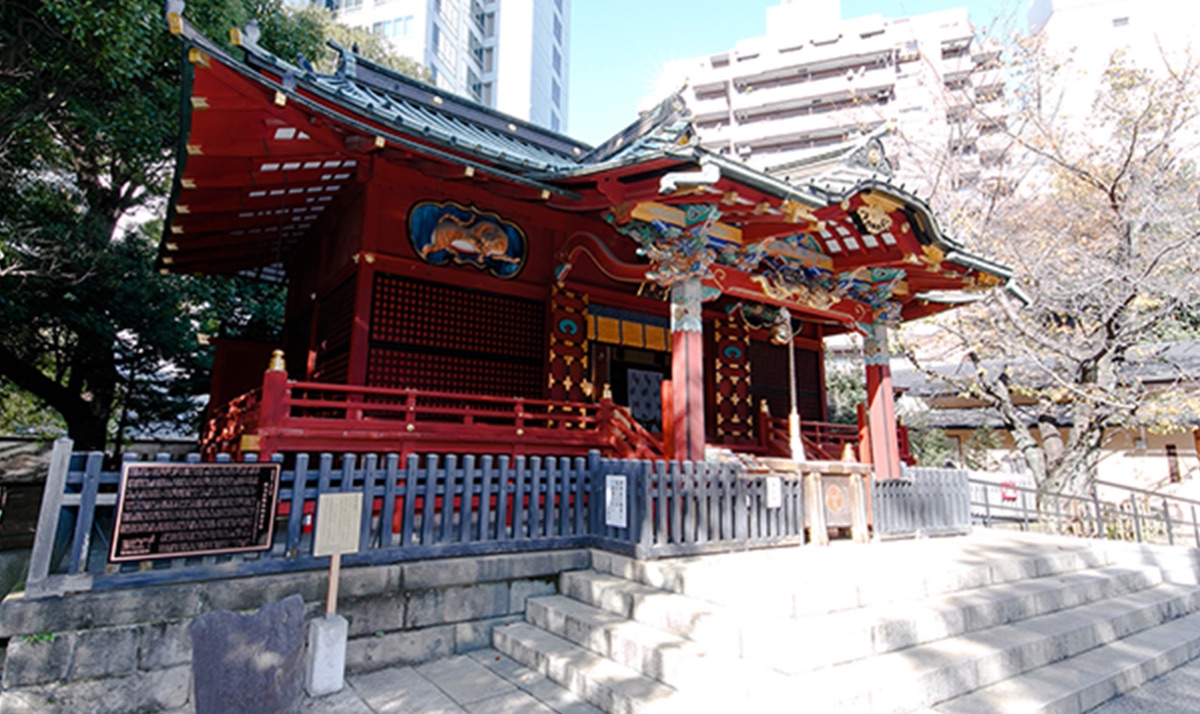
Konno Hachimangu is at 3-5-12 Shibuya, a six-minute walk from Shibuya Station exit C1, behind the police station. Founded in Kanji 6 (1092), it is the tutelary shrine for the old Aoyama and Shibuya parish. The enshrined deity is Emperor Ojin (Hondawake no Mikoto). The wooden hall is an early-Edo gift tied to Tokugawa Iemitsu, Kasuga no Tsubone, and Aoyama Hoki-no-kami Tadatoshi. Shibuya City lists it as a tangible cultural property. The Konno-zakura cherry, a Shibuya natural monument, still sits on the grounds: single and double blossoms on the same branch, transplanted on Minamoto no Yoritomo's order to keep the name of Konno-maru.
Shibuya Konno-maru Tsunemitsu was born on 15 August 1141 after his parents prayed at this Hachiman shrine. The childhood name takes two characters from Kongo Yasha Myo-o. That story is why a 930-year-old shrine still occupies a hill that developers would rather turn into another slab. During Reitaisai the hill is not a quiet history walk. Special prayers run 14-20 September. Ikebana from Torii Akizuki of Soshin-ryu is up for the same week. The main rite on 14 September at 11:00 is the shrine's own ceremony. Street energy starts later.
Sunday 14:00 at 109 is the choke point
Shibuyamatsuri.com, the festival's own 2026 site, lists Friday afternoon as mitama-ire: the Konno priest puts the deity into each neighbourhood mikoshi. Saturday yomiya is from 18:00. Sunday the procession toward 109 is 12:00-13:30. The union parade of 14 mikoshi in front of 109 is 14:00-14:30. After that the groups peel back toward their own mikisho. Return to the shrine (kango) is listed at 19:00. Times shift by town association. Do not treat 14:00 as a theatre curtain.
The shrine's 14 September notice and the nigiwai site split Sunday into two union parades: Dogenzaka around 14:00, Aoyama around 15:00. That is the useful split if you hate the 109 scrum. Watch Dogenzaka from a side street west of the crossing, then walk to Aoyama-dori for the second wave. The 109 plaza is where phones go up and foot traffic from Shibuya 109 shoppers hits the bearers. Give the poles room. Fourteen mikoshi in a shopping canyon do not stop for a selfie stick.
Town associations named on the 2026 site include Uguisudani Mutsu-kai, Kamiyama, Udagawa, Maruyama, Dogenzaka, Shibuya 2-chome, Shibuya Chuo-gai, Shibuya 3-chome, Shinsen-Maruyama Shineikai, Hyakken-dana Naka, Eiwa, Fujimi, Dogenzaka-ue, Nanpeidai, and Tokiwamatsu. Bearer recruitment for 2026 is already closed at capacity. Spectators do not need a happi. Stay off the shafts.
Two ennichi: the park for kids, the car park for kitchen cars
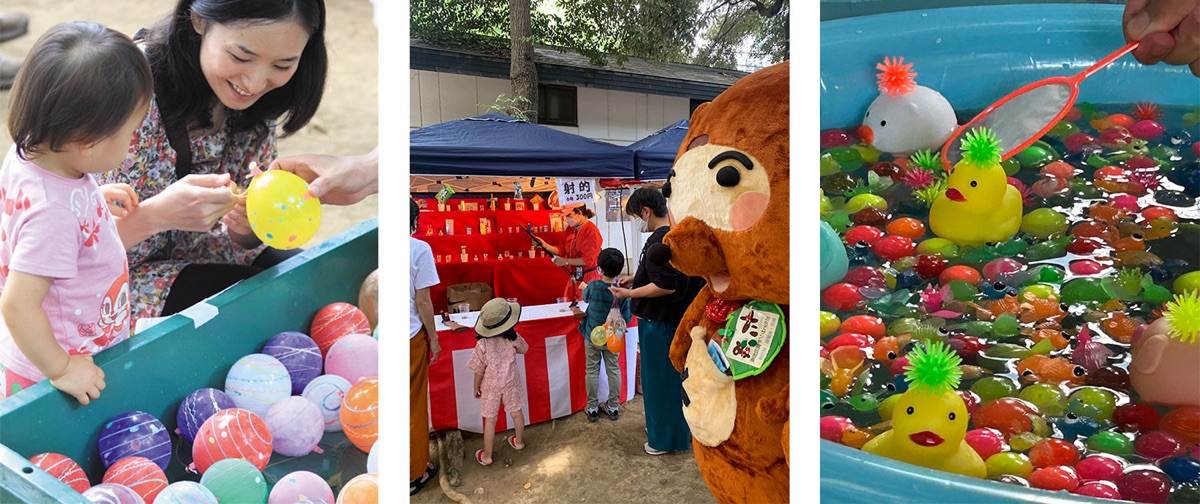
Nigiwai-matsuri.com is the shrine's 2026 entertainment site for Saturday 19 and Sunday 20 September. Kodomo ennichi sits in the children's park 11:00-21:00 both days: goldfish scooping, yo-yo fishing, cotton candy, shooting, portraits, local mascots. Mirai ennichi occupies the parking lot beside the shrine, same hours, with kitchen cars. Named food this year includes kebab, beer, takoyaki, steak, baby castella, Taiwanese mian xian, tacos, roast chicken, and wine. URI to Daidokoro (Vietnamese) is on the stall list. Juice vouchers on the nigiwai site are limited to 200 cartons a day at the kids drink stall, one per person, phone screen required.
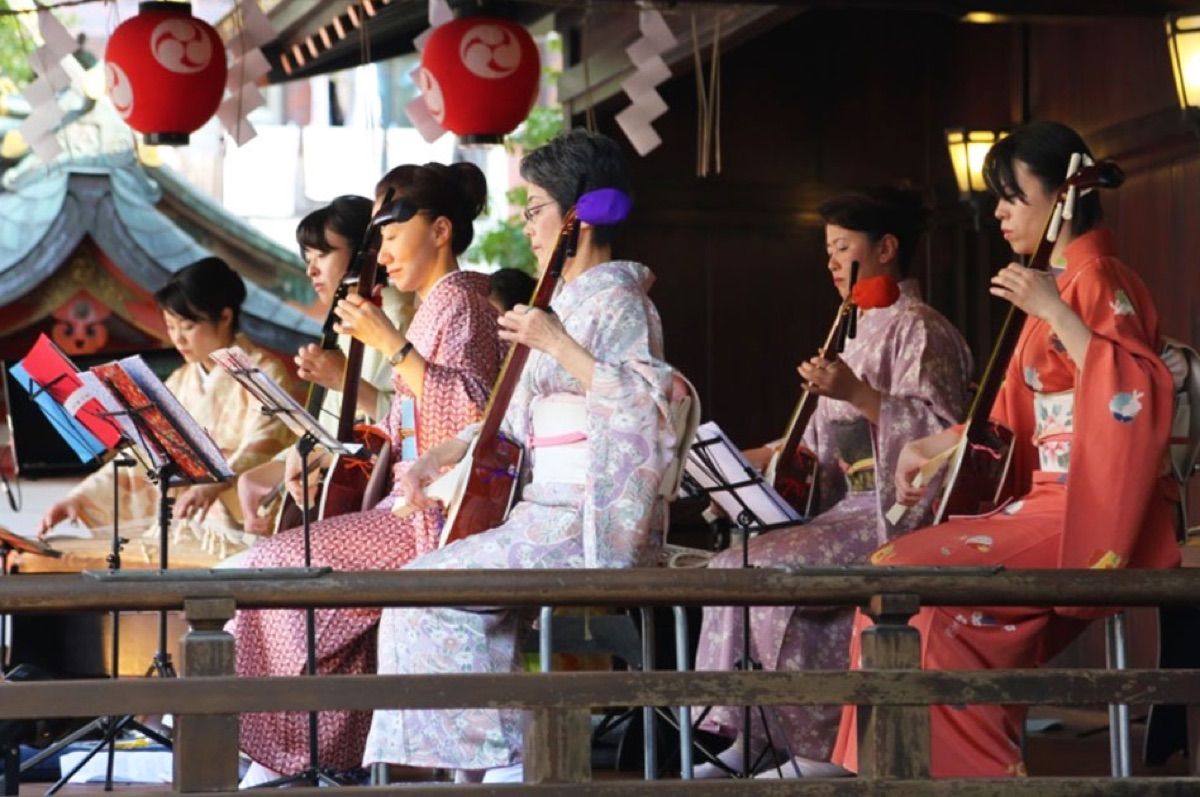
Kaguraden on Saturday is a mixed bill, not a single folk set. The shrine notice and the nigiwai timetable disagree on one label: the shrine writes "East Indian classical dance Surya" at 11:00, nigiwai writes Odissi. Treat it as the same 11:00 Indian dance slot until the day. Then tai chi at 12:00, nihon-buyo at 13:00, Shibuya folktales at 15:00, Ohara-bushi / Shibuya Ondo / Hanya-bushi and Yakumaru-no-tachi / Jigen-ryu at 16:00, chanson at 17:00, koto at 18:00, mime at 19:00. Pony leading on the grounds is 14:00 and 15:00 Saturday. Sunday the kaguraden runs satokagura all day, with Fukutoku no Mai at 19:00 and candy thrown into the crowd. Heat on the hill in mid-September is real. There is little shade once the lanterns go up.
If you only have one hour, spend it at 109 between 13:45 and 14:30 on Sunday, then walk up to the shrine for satokagura and the evening lanterns. If you have a child, invert that: park and shrine first, 109 later or not at all. The scramble is a separate zoo that afternoon. Official shrine: konno-hachimangu.jp. Parade times: shibuyamatsuri.com. Ennichi map and juice coupon: nigiwai-matsuri.com.
Practical Details
- Dates: 18 September (Fri) to 20 September (Sun) 2026. Shrine ceremony 14 September 11:00. Public ennichi 19-20 September
- Time: Friday afternoon mitama-ire. Saturday yomiya from 18:00. Sunday procession 12:00-13:30, 109 union parade 14:00-14:30, kango 19:00. Ennichi 11:00-21:00
- Venue: Konno Hachimangu, 3-5-12 Shibuya, Shibuya-ku, Tokyo 150-0002. Union parade in front of SHIBUYA109, Dogenzaka
- Nearest station: Shibuya Station, exit C1, about 6 minutes (behind Shibuya Police Station)
- Price: Free to watch. Special prayers during 14-20 September are charged at the shrine office (book by phone, 03-3407-1811)
- Website: Konno Hachimangu
- Event page: Konno Hachimangu Reitaisai